Mistakes as fertiliser: what children take from failure
| Learning from mistakes, Family life, Ages 9 to 12
A child comes home with a botched test. Or they forgot their lines while reading aloud, hammered the ball out of play, shouted at their best friend. The sentence that slips out of adults fastest is: “That’s not so bad.”
It is well meant, and it works immediately. It takes the pressure out of the room. Its drawback only shows afterwards: it closes the subject before the subject has opened. The child hears that the matter is settled. It is not settled, because tomorrow the same task will be there again.
Comforting and reviewing are two separate steps
A child who is crying or furious cannot review anything. In that moment comfort is exactly right. The mistake is not in comforting but in stopping there.
The second step comes later, once the pulse is down again. Often that is the dinner table, four hours after the event. By then the child can take the question of what actually happened.
What fertiliser means here
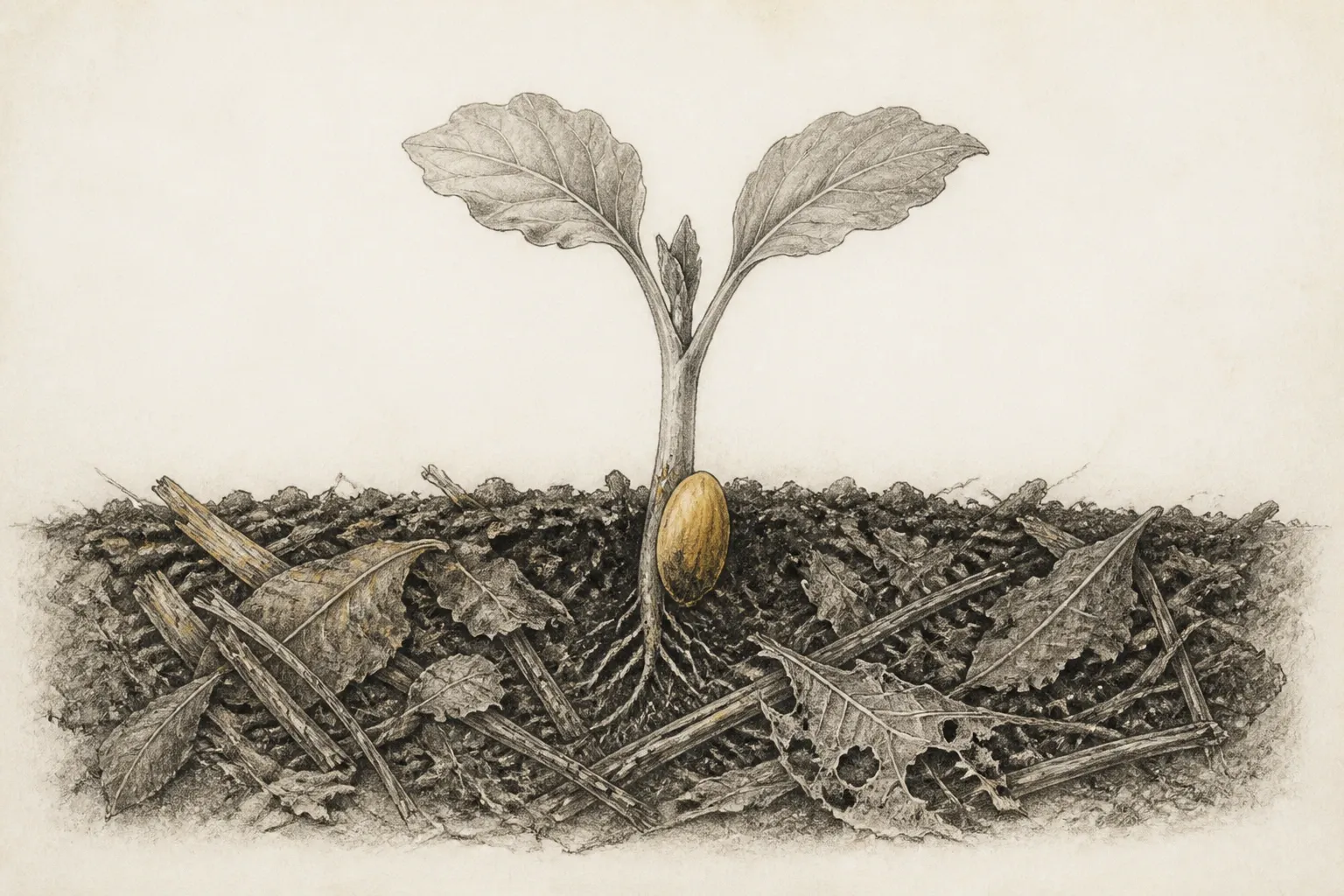
Compost does not work straight away. Something has to break down first before it feeds the soil. Translated: a failure becomes usable when it is named and then put somewhere.
“It wasn’t bad” leaves nothing behind. “It was unpleasant, and I saw something in it” leaves something behind. The difference sits in a single clause.
Sentences that work at the dinner table
These openings invite an account without passing judgement:
- “Tell me how it went.”
- “At what point did it tip over?”
- “What made you notice it wasn’t working?”
- “What would you start differently tomorrow?”
- “What are you taking from it?”
- “Do you need anything from me for that, or will you do it yourself?”
One rule matters more than the choice of question: ask, then stay quiet. Children need long pauses for this, often ten or fifteen seconds. Anyone who fills the pause with advice never gets to hear the answer.
When an answer does come, repeating it is enough: “So you only started once half the time was gone.” The child hears their own sentence from outside and often corrects it themselves. No verdict is needed at that point.
Sentences that close the subject
- “That’s not so bad.” The child experiences it as bad and learns that its feeling does not count.
- “You just need to try harder.” There is no action in it that a child could carry out tomorrow.
- “I told you so.” The adult is right, and the child has one reason fewer to say anything next time.
- “Everyone else manages it.” From here the conversation is about comparison, not about the mistake.
Neither play it down nor blow it up
Between making light of it and making a drama of it lies a plain middle: name the thing as it is, then move on. “You forgot the homework. That annoys you. Tomorrow you’ll write it down right after the lesson.”
The mistake stays a mistake. It just gets a continuation instead of a verdict.
It also helps to separate the thing from the person. “The sum is wrong” is not the same as “you can’t do this”. Children from nine hear that difference very precisely.
When the child does not want to talk
Some children shut down as soon as they have someone sitting opposite them at a table. Alongside something else it goes better: drying up, in the car, on the way to training. No eye contact, no session.
“If you want, we’ll talk about it tomorrow” is a complete sentence. It is not a defeat, it holds the door open.
Adults go first
Children watch very closely how adults handle their own mistakes. Anyone who argues the burnt dinner away or blames the missed turning on the traffic supplies the model along with it.
One sentence at the table is enough: “I sent an email too early today and had to correct it. Next time I’ll read it through first.” It does not have to become a performance. It is enough that it happens now and then.
The timescale is longer than you think
Nothing changes in one evening. What works is the same question over months, in a calm voice, even when the answer is a shrug at first. At some point the child answers it before anyone asks.
Until then a modest goal helps: the child should tell you about the next mistake at home rather than hide it. Everything else hangs on that.
That is exactly what my children’s novel “Mind Garden” is about. Mika learns to treat failed attempts as compost rather than as evidence against himself. The book ends with a workbook part, with a seed diary and a compost list that children from nine can fill in without instructions.
This piece is by Dr. Wahed Hemati, author of the children’s novel Mind Garden: As You Think, So You Grow for children aged 9 and up.